
4 Best Practices for Effective Voice Message Text in Hotels

Introduction
In an industry where first impressions hold immense weight, hotels grapple with the vital task of mastering effective communication with their guests. Effective communication isn’t just a nicety; it’s a necessity that can make or break a guest’s experience. By adopting best practices in voice messaging, accommodations can significantly enhance guest experiences and cultivate loyalty.
However, as preferences shift from traditional phone calls to text messaging, how can hotels ensure their messaging strategies resonate with diverse audiences? This article explores essential practices that not only streamline communication but also leverage innovative technologies to meet evolving guest expectations.
Hotel managers face a myriad of challenges in this dynamic landscape. The need to adapt to changing communication preferences is paramount. By embracing modern messaging solutions, hotels can not only meet but exceed guest expectations, fostering a deeper connection with their clientele.
Let’s delve into the strategies that can transform your communication approach and elevate guest satisfaction. Are you ready to enhance your hotel’s messaging strategy?
Understand Your Audience's Communication Preferences
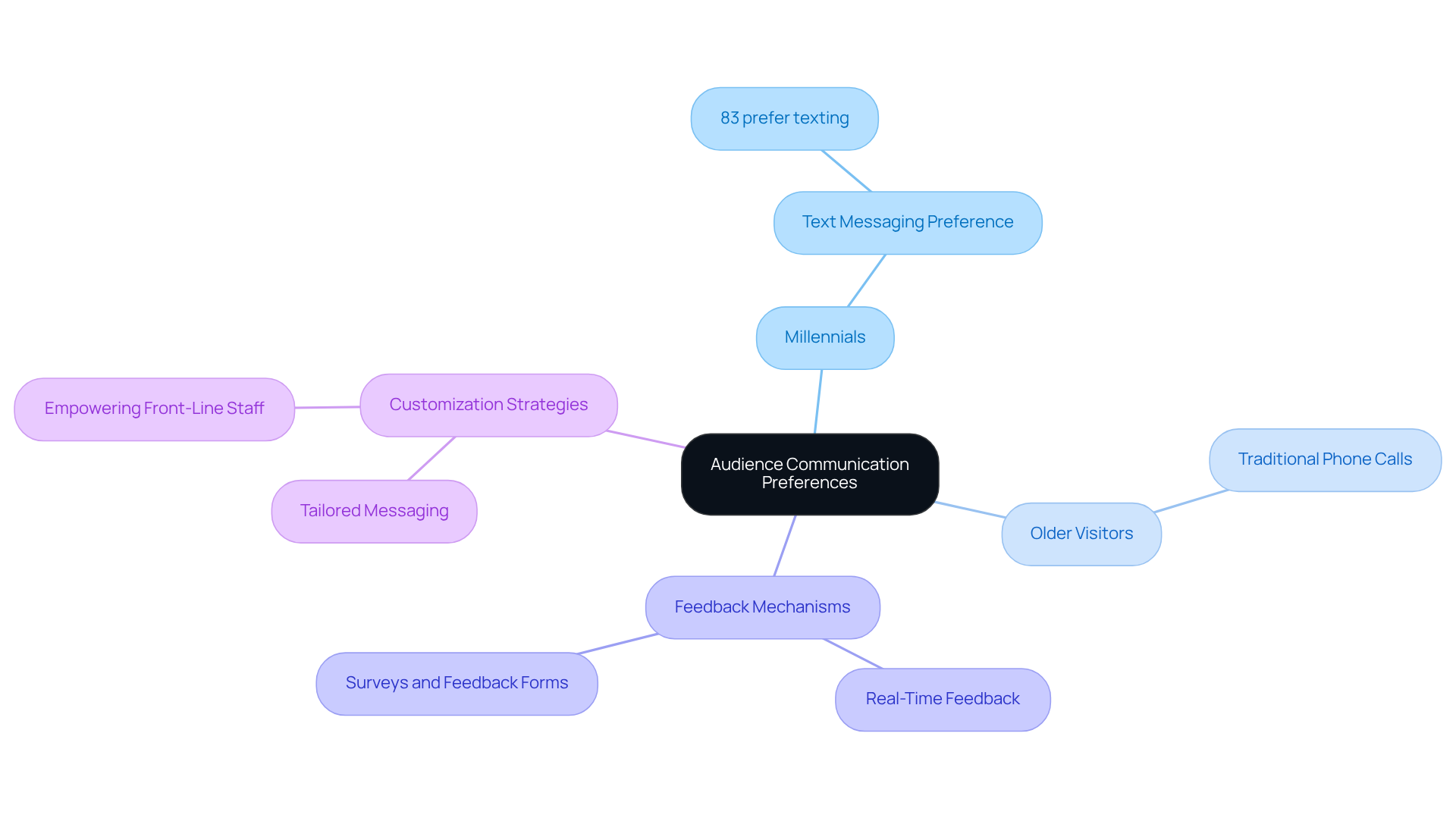
Effective communication is paramount in the hospitality industry. To truly connect with visitors, hotels must prioritize understanding their interaction preferences. This requires a thorough analysis of demographic data, visitor feedback, and previous interactions to pinpoint preferred channels and styles of communication. For instance, younger visitors, particularly millennials, exhibit a strong inclination towards text messaging, with over 83% indicating they text more than they talk on their smartphones. Conversely, older visitors may still prefer traditional phone calls. By segmenting individuals based on these preferences, accommodations can craft tailored voice message texts that resonate more deeply.
Implementing surveys or feedback forms can yield invaluable insights into visitor preferences, empowering accommodations to refine their messaging strategies. Real-time feedback mechanisms, such as mid-stay text requests, enable hotels to gather immediate insights and address concerns promptly. This proactive approach not only enhances the visitor experience but also cultivates a sense of connection and loyalty, as individuals feel their input is valued and acted upon. Ultimately, customizing interaction strategies to align with visitor demographics can significantly boost satisfaction and encourage repeat visits.
Integrate AI-Powered Voice Messaging Solutions
Effective communication is paramount in the hospitality industry, where first impressions can make or break a guest's experience. AI-driven voice messaging solutions, such as those from VoicePrompts.ai, are revolutionizing how accommodations interact with their visitors by automating the creation of personalized voice messages. This innovative technology empowers hotels to deliver timely information without the burden of extensive manual input.
Consider the impact of automated pre-arrival messages. These can include vital details like check-in instructions, local attractions, and exclusive offers, ensuring guests feel welcomed and informed even before they step through the door. Not only does this streamline operations, but it also enhances guest satisfaction by providing a seamless interaction experience.
VoicePrompts.ai simplifies the process of creating customized AI-powered phone messaging solutions that incorporate voice message text through a straightforward four-step approach. This allows establishments to quickly produce professional on-hold and auto-attendant messages tailored to their specific needs, all while maintaining a consistent brand experience across every interaction. Furthermore, the platform supports multilingual communications, enabling hotels to effectively cater to a diverse clientele. For instance, accommodations in tourist-heavy areas can offer messages in various languages, significantly improving the experience for international travelers.
By integrating these advanced systems, hotels can boost their responsiveness and engagement, ultimately leading to higher visitor satisfaction rates. Industry leaders emphasize that automating guest interactions is essential for maintaining a competitive edge in the hospitality sector. This technology allows staff to focus on high-value engagements while routine inquiries are efficiently managed by AI. However, successful integration of AI solutions necessitates comprehensive staff training to ensure effective oversight of AI communications.
With 80% of travelers now utilizing AI for planning their trips, the urgency for accommodations to embrace these technologies is undeniable. Those who adopt AI-driven solutions early will secure a significant competitive advantage. Are you ready to transform your guest interactions and elevate your hospitality game?

Maintain Consistency in Messaging Across Platforms
Effective communication is paramount in the hospitality industry. To create a cohesive guest experience, accommodations must ensure that their communication is consistent across all platforms - phone calls, emails, and social media. A distinct brand voice and style guide are essential, detailing key communication elements, tone, and language. If an establishment promotes a friendly and welcoming atmosphere, this tone should resonate in every voice message, from greetings to on-hold prompts.
Statistics reveal that brands with unified communication can experience a 23% increase in customer loyalty. This underscores the critical importance of consistency. Utilizing VoicePrompts.ai empowers hotels to upload and manage brand-specific communication, ensuring that every interaction reinforces the hotel's identity. Regular evaluations of communication across platforms help identify inconsistencies and ensure alignment, ultimately boosting visitor trust and loyalty.
Consider successful examples like Rosewood Hotels. Their consistent communication not only strengthens brand identity but also nurtures emotional bonds with visitors, leading to return trips and referrals. Are you ready to elevate your hotel's communication strategy? Embrace the power of unified messaging and watch your guest loyalty soar.

Evaluate and Adjust Your Voice Messaging Strategy
Effective communication is crucial in the hospitality industry. To ensure that voice communication remains impactful, establishments must adopt a regular assessment process. This involves:
- Examining visitor feedback
- Tracking engagement metrics
- Conducting A/B testing on various communication strategies
With 70% of visitors now expecting communication options during their stay, accommodations must adapt their strategies to meet these expectations.
If a specific greeting or on-hold message receives negative feedback, accommodations can quickly modify the content to align better with visitor preferences. For instance, an establishment that utilized analytics tools to enhance its communication saw a significant increase in guest satisfaction ratings after implementing data-informed changes. VoicePrompts.ai provides analytical tools that help accommodations monitor the effectiveness of their communications, enabling informed adjustments.
Moreover, with VoicePrompts.ai's AI-driven platform, creating and storing customized on-hold and auto-attendant messages is straightforward. This allows establishments to maintain a professional and engaging communication style. However, it’s essential to be aware of common pitfalls in voice communication strategies, such as over-automation or generic messaging, which can detract from the visitor experience.
By continuously refining their voice message text strategy and leveraging A/B testing results, hotels can significantly enhance guest experiences and cultivate long-term loyalty. Are you ready to elevate your communication strategy and meet the evolving expectations of your guests?

Conclusion
Effective communication in the hospitality industry is not just important; it’s essential for creating unforgettable guest experiences. In a competitive market, how can hotels ensure they stand out? By mastering effective voice messaging, hotels can significantly enhance their interactions with visitors. Understanding guests' communication preferences, integrating AI solutions, maintaining consistency across platforms, and continuously evaluating messaging strategies are key practices that foster loyalty and elevate the guest experience.
Consider these four best practices for effective voice messaging:
- Tailoring communication to audience preferences
- Leveraging AI for personalized interactions
- Ensuring consistency across all messaging channels
- Regularly assessing and refining messaging strategies
Each element plays a crucial role in building strong connections with guests, leading to increased satisfaction and repeat business. Are you ready to transform your communication approach?
In today’s rapidly evolving hospitality landscape, the importance of effective voice messaging cannot be overstated. Embracing these best practices will not only enhance guest experiences but also empower hotels to adapt to changing expectations and preferences. By prioritizing communication strategies that resonate with visitors, accommodations can create lasting impressions that drive loyalty and success. Don’t wait - take action now to elevate your hotel’s voice messaging and watch your guest satisfaction soar!
Frequently Asked Questions
Why is understanding communication preferences important in the hospitality industry?
Understanding communication preferences is crucial because it allows hotels to connect more effectively with visitors, enhancing their overall experience and satisfaction.
What methods can hotels use to analyze visitor communication preferences?
Hotels can analyze visitor communication preferences by examining demographic data, collecting visitor feedback, and reviewing previous interactions to identify preferred channels and styles of communication.
How do communication preferences vary among different age groups?
Younger visitors, particularly millennials, tend to prefer text messaging, with over 83% indicating they text more than they talk. In contrast, older visitors may still favor traditional phone calls.
What can hotels do to tailor their communication strategies?
Hotels can segment individuals based on their communication preferences and craft tailored voice message texts that resonate more deeply with different visitor demographics.
How can surveys and feedback forms assist hotels in understanding visitor preferences?
Surveys and feedback forms can provide invaluable insights into visitor preferences, enabling hotels to refine their messaging strategies and improve communication.
What role do real-time feedback mechanisms play in enhancing visitor experience?
Real-time feedback mechanisms, such as mid-stay text requests, allow hotels to gather immediate insights and address concerns promptly, which enhances the visitor experience and fosters a sense of connection and loyalty.
What is the ultimate benefit of customizing interaction strategies for hotels?
Customizing interaction strategies to align with visitor demographics can significantly boost satisfaction and encourage repeat visits to the hotel.
List of Sources
- Understand Your Audience's Communication Preferences
- changeengine.com (https://changeengine.com/articles/how-hospitality-brands-are-using-comms)
- hijiffy.com (https://hijiffy.com/resources/articles/six-trends-in-guest-communications-for-hoteliers-to-consider-in-2025)
- Guest Messaging: 7 Stats Every Hotelier Needs to Know (https://hoteltechreport.com/news/guest-messaging-statistics)
- vguest.ai (https://vguest.ai/blog/understanding-guests-in-real-time-turning-feedback-into-action)
- digitalguest.com (https://digitalguest.com/hotel-guest-communication-digitalguest)
- Integrate AI-Powered Voice Messaging Solutions
- blog.hotelogix.com (https://blog.hotelogix.com/ai-messaging-hotel)
- blog.thehotelsnetwork.com (https://blog.thehotelsnetwork.com/the-ai-revolution-in-hospitality-why-voice-agents-are-changing-the-game-for-hoteliers)
- AI in Hospitality: The 2025 Reality and the 2026 Horizon (https://hospitalityupgrade.com/magazine-articles/ai-in-hospitality-the-2025-reality-and-the-2026-horizon)
- prnewswire.com (https://prnewswire.com/news-releases/hotel-ai-adoption-surges-with-82-expanding-use-in-2026-302719052.html)
- Maintain Consistency in Messaging Across Platforms
- comosoft.us (https://comosoft.us/articles/how-multichannel-marketing-drives-consistent-brand-messaging)
- The Importance Of Consistency In Branding (https://forbes.com/councils/forbescommunicationscouncil/2024/12/30/the-importance-of-consistency-in-branding)
- americasgreatresorts.net (https://americasgreatresorts.net/the-importance-of-brand-consistency-in-luxury-hospitality-marketing)
- dennis.studio (https://dennis.studio/built-to-last-why-brand-consistency-is-the-secret-to-hotel-success)
- Achieving Brand Consistency: Strategies for Effective Cross-Channel Communication (https://siteimprove.com/blog/consistent-messaging-across-channels)
- Evaluate and Adjust Your Voice Messaging Strategy
- revinate.com (https://revinate.com/blog/voice-channel-in-hospitality)
- Guest Messaging in 2025: How Hotels Are Redefining Guest Experiences (https://guesttouch.com/blog/guest-messaging-in-2025-how-hotels-are-redefining-guest-experiences)
- How conversational AI is reshaping the hotel guest experience (https://hoteldive.com/news/conversational-ai-hotel-guest-experience/805271)
- hoteltechreport.com (https://hoteltechreport.com/news/canarys-ai-voice-recognized-as-best-hospitality-solution-by-hoteltechreport)
- Driving Hotel Efficiency with Two-Way Voice Communication (https://news.reactmobile.com/blog/from-tools-to-conversations-why-two-way-voice-is-streamlining-hotel-communication)
Start your 14-day trial in seconds
Create your account with just a few details and jump straight into the platform.