
Compare Phone Systems: A Step-by-Step Guide for Hotel Managers
Introduction
Effective communication stands as the backbone of the hospitality industry, where every interaction can significantly influence a guest's experience. For hotel managers, selecting the right phone system transcends mere technicality; it becomes a strategic decision that can enhance operational efficiency and elevate customer satisfaction. As the industry evolves towards modern solutions like VoIP and AI-driven messaging, hotel managers face the challenge of navigating a plethora of options.
What factors should hotel managers consider to ensure they choose a system that not only meets their unique needs but also enhances their service offerings? Understanding these elements is crucial in making an informed decision that aligns with the demands of today’s hospitality landscape.
In this competitive environment, the right communication tools can set a hotel apart. By prioritizing effective communication, managers can foster a more engaging and responsive atmosphere for their guests. This not only improves satisfaction but also drives loyalty and repeat business.
As you contemplate your options, consider how a robust phone system can streamline operations and improve guest interactions. Are you ready to elevate your service offerings and meet the expectations of modern travelers? The right choice awaits.
Understand the Basics of Phone Systems
Effective communication is crucial in the hospitality industry, where guest satisfaction hinges on seamless interactions. To navigate the complex landscape of accommodation telephone networks, understanding the two primary types of phone systems - Private Branch Exchange and modern VoIP - is essential. PBX solutions, while hardware-oriented, often come with a hefty price tag, typically ranging from $15,000 to over $30,000, depending on size and capabilities. In contrast, VoIP solutions leverage internet connectivity, offering flexibility and scalability that can adapt to evolving operational needs.
As the hospitality sector evolves, the shift towards VoIP technology is gaining traction. Platforms like Think Simplicity exemplify this trend, providing extensive features without the burden of additional licensing or interface costs. This transition not only reduces expenses but also enhances communication, allowing staff to collaborate more effectively and respond swiftly to client needs.
When selecting a phone solution, it is important to consider the needs of your establishment. This includes visitor services, staff coordination, and emergency protocols. For instance, hotels that adopt VoIP can take advantage of features like call forwarding and mobile access, which are vital for improving staff coordination and enriching guest experiences. Additionally, integrating telephone networks with property management systems can boost revenue by monitoring usage and streamlining billing processes.
Real-world applications underscore the benefits of contemporary technologies. Hotels that have implemented VoIP solutions report increased efficiency, thanks to user-friendly features that require minimal training. Moreover, utilizing the same cabling for both voice and data services simplifies installation and cuts costs.
Incorporating voice solutions, such as those from VoicePrompts.ai, can significantly enhance customer communication. With over 850 options available, accommodations can craft messages that are budget-friendly, quick, and easily customizable. This capability not only boosts customer engagement but also ensures a consistently branded experience - an essential aspect in the hospitality sector.
In conclusion, it is vital for lodging managers to compare phone systems to understand the differences between PBX and VoIP setups. By evaluating the specific needs of your establishment and considering the latest technology trends, including AI-driven messaging solutions, you can make informed decisions that enhance both operational efficiency and customer satisfaction.

Identify Key Features for Hotel Operations
Effective communication is crucial in the hospitality industry, especially when we compare phone systems. Hotel managers face numerous challenges, from managing high call volumes to ensuring guest satisfaction. Prioritizing features that enhance operational efficiency and customer satisfaction is essential in overcoming these hurdles.
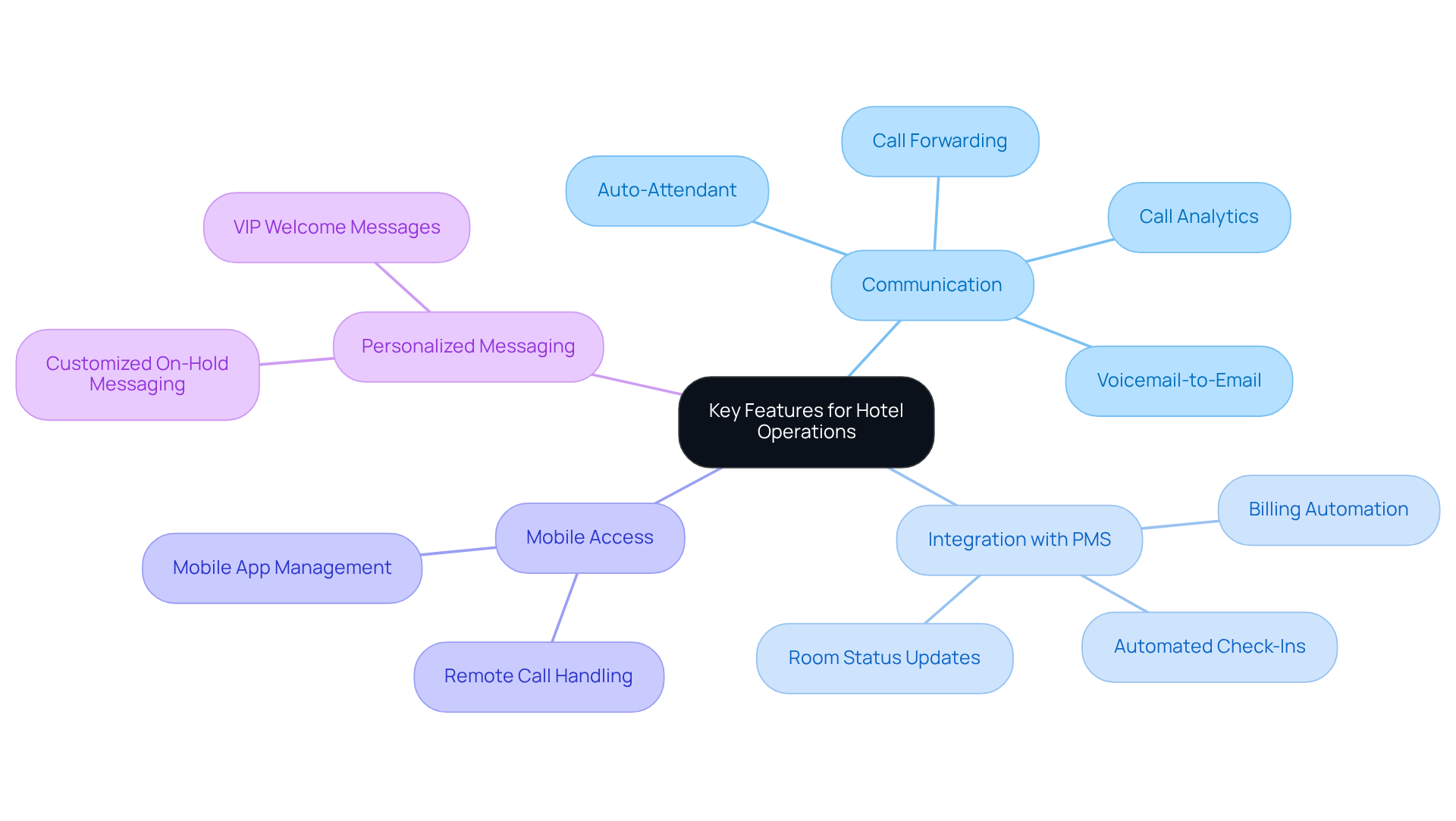
Key functionalities, such as call routing, simplify call management by automatically directing visitors to the appropriate departments. This not only decreases wait times but also enhances service quality. Call forwarding ensures inquiries reach the right personnel, while voicemail allows staff to respond quickly to messages, significantly improving communication responsiveness.
Integration with property management systems is vital. It automates processes like check-ins and room status updates, creating a seamless experience for both guests and staff. Additionally, sophisticated analytics functionalities provide valuable insights into call trends and employee performance, enabling establishments to refine their operations further.
Mobile app access empowers staff to manage calls and messages from anywhere, increasing flexibility and responsiveness. Interactive voice response can elevate the visitor experience by delivering relevant information during their wait, reinforcing the establishment's brand identity.
To ensure you can effectively choose a system, develop a list of essential elements tailored to your hotel's specific requirements and guest expectations. This strategic approach will guide you in choosing a phone solution that not only meets operational demands but also enhances the overall guest experience. Are you ready to transform your hotel's communication system?
Compare Phone Systems Using a Structured Approach
Effective communication is crucial in the hospitality industry. To effectively compare systems, start by creating a list that includes features, pricing, scalability options, and support. Have you considered VoicePrompts.ai? This platform offers solutions with over 850 options designed to enhance customer interactions.
Identify your top contenders and evaluate them against a checklist of must-have functionalities tailored to your hotel's specific needs. Conducting demos or trials can significantly assist in evaluating user experience and functionality. Furthermore, gather feedback from employees who will engage with the platform daily; their insights are essential for understanding usability and performance.
This organized approach not only simplifies the decision-making process but also ensures that the selected framework aligns seamlessly with your establishment's operational needs. Don't leave your communication strategy to chance—take action now to enhance your hotel's customer interactions.

Analyze Costs and Budget Considerations
Effective communication is crucial in the hospitality industry. Hotel managers often grapple with the challenge of balancing upfront expenses and ongoing operational costs. Phone systems can come with hefty installation and maintenance fees, while VoIP systems typically offer lower monthly rates and reduced hardware expenses.
VoicePrompts.ai distinguishes itself with a pricing model - what you see is what you pay, always. There are no long-term commitments or cancellation fees, allowing you to start immediately without any upfront costs. Have you considered how financing options or subscription models could provide flexibility in your budgeting?
With over 850 installations, VoicePrompts.ai delivers tailored solutions that enhance customer communication and engagement. This makes it an ideal choice for small and growing businesses. To make a financially informed decision that supports your hotel's long-term goals, you should create a budget plan that outlines all potential costs associated with each system.
In summary, costs can significantly impact your hotel's success. Are you ready to elevate your communication strategy?

Conclusion
Selecting the right phone system is crucial for hotel managers, as it can greatly impact operational efficiency and guest satisfaction. Effective communication is the backbone of the hospitality industry, and understanding the differences between traditional PBX and modern VoIP systems, along with the benefits of cloud-based solutions, empowers managers to make informed decisions tailored to their unique needs.
Key insights throughout this guide emphasize the importance of identifying essential features such as:
- Call management
- Integration with property management systems
- Mobile accessibility
These functionalities not only streamline communication processes but also enhance the overall guest experience. Moreover, leveraging AI-powered messaging solutions can elevate customer engagement, ensuring a consistent and professional brand presence.
When comparing phone systems, a structured methodology is essential. This involves a comprehensive evaluation of:
- Costs
- Features
- User feedback
The significance of this choice cannot be overstated; it serves as the foundation for effective communication in the hospitality sector. Hotel managers must take proactive steps to transform their communication strategies, equipping themselves to meet the demands of an ever-evolving landscape while maximizing guest satisfaction and operational effectiveness.
Frequently Asked Questions
What are the two primary types of phone systems in the hospitality industry?
The two primary types of phone systems are traditional PBX (Private Branch Exchange) and modern VoIP (Voice over Internet Protocol).
What are the cost considerations for PBX systems?
PBX solutions typically have a hefty price tag, ranging from $15,000 to over $30,000, depending on their size and capabilities.
How do VoIP solutions differ from traditional PBX systems?
VoIP solutions leverage internet connectivity, offering flexibility and scalability that can adapt to changing operational needs, while PBX systems are more hardware-oriented.
What advantages do cloud-based phone solutions offer?
Cloud-based solutions reduce expenses and enhance communication, allowing staff to collaborate more effectively and respond swiftly to client needs.
What should be considered when selecting a phone solution for a hospitality establishment?
It is important to compare phone systems based on unique communication requirements, including visitor services, staff coordination, and emergency protocols.
What features do hotels gain by adopting VoIP technology?
Hotels that adopt VoIP technology can benefit from features like smart call routing and mobile access, which improve staff coordination and enhance guest experiences.
How can integrating telephone networks with property management software (PMS) benefit hotels?
Integration can boost revenue by monitoring usage and streamlining billing processes.
What real-world benefits have hotels experienced by implementing VoIP solutions?
Hotels report increased operational efficiency and guest satisfaction due to user-friendly features that require minimal training.
How does using the same cabling for voice and data services benefit installation?
It simplifies installation and reduces costs.
What role do AI-powered customizable messaging solutions play in customer communication?
They enhance customer communication by allowing accommodations to create professional on-hold and auto-attendant messages that are budget-friendly, quick, and easily customizable.
Why is it important for lodging managers to compare phone systems?
Comparing phone systems helps lodging managers understand the differences between PBX and VoIP setups, enabling them to make informed decisions that enhance operational efficiency and customer satisfaction.
List of Sources
- Understand the Basics of Phone Systems
- hoteldive.com (https://hoteldive.com/news/6-emerging-hotel-technologies-h1-2025/752600)
- Best Hotel Phone Systems in 2025 | Buyer's Guide (https://sangoma.com/blog/best-hotel-phone-systems)
- thecaterer.com (https://thecaterer.com/news/hotel-phone-systems)
- hoteltechreport.com (https://hoteltechreport.com/news/hotel-phones)
- thinksimplicity.com (https://thinksimplicity.com/new-blogs/how-much-should-a-hotel-phone-system-really-cost-in-2025)
- Identify Key Features for Hotel Operations
- blog.grandstream.com (https://blog.grandstream.com/case_studies/accor-hotels-guest-and-staff-communications-solution)
- softwareexplore.com (https://softwareexplore.com/how-to-select-the-perfect-hotel-telephone-system-for-2025)
- expertmarket.com (https://expertmarket.com/phone-systems/hotel-phones)
- What Is An Auto Attendant Phone System? 5 Benefits For Hotels (https://phonesuite.com/articles/5-reasons-hotels-are-embracing-auto-attendant-phone-systems)
- tech.co (https://tech.co/business-phone-systems/hotel-phone-systems)
- Compare Phone Systems Using a Structured Approach
- mara-solutions.com (https://mara-solutions.com/post/hotel-review-statistics)
- tech.co (https://tech.co/business-phone-systems/hotel-phone-systems)
- hotelspeak.com (https://hotelspeak.com/2025/03/hotel-guest-apps-in-2025-what-the-data-says-about-features-guests-actually-use)
- 135+ Customer Service Statistics You Need to Know in 2026 | AmplifAI (https://amplifai.com/blog/customer-service-statistics)
- 70+ Hotel Statistics You Need to Know (https://canarytechnologies.com/post/hotel-statistics)
- Analyze Costs and Budget Considerations
- blog.grandstream.com (https://blog.grandstream.com/case_studies/author/grandstream-networks-case-studies/page/5)
- thinksimplicity.com (https://thinksimplicity.com/new-blogs/how-much-should-a-hotel-phone-system-really-cost-in-2025)
- tech.co (https://tech.co/business-phone-systems/hotel-phone-systems)
Start your 14-day trial in seconds
Create your account with just a few details and jump straight into the platform.