
Crafting the Perfect Greeting Phone Message for Your Hotel
Introduction
Crafting a warm and inviting greeting phone message is crucial for hotels looking to boost guest satisfaction right from the first interaction. Effective communication in the hospitality industry isn’t just a nicety; it’s a necessity. As guest expectations evolve, hotel managers face the challenge of ensuring their greetings not only inform but resonate deeply with callers.
So, how can hotels achieve this? By tailoring messages to engage diverse audiences, hotels can streamline the creation process while enhancing the overall guest experience. This article explores the key elements that make a greeting effective, offering insights that can transform a simple phone call into a memorable first impression.
Consider this: a well-crafted greeting can set the tone for a guest's entire stay. It’s not just about relaying information; it’s about creating a connection. With the right approach, hotels can turn a standard greeting into an opportunity to engage and delight.
In a competitive landscape, where personalization is paramount, the question remains: are your greetings making the impact they should? Let’s delve into the strategies that can elevate your communication and ensure your hotel stands out.
Define Key Elements of an Effective Greeting Message
A well-crafted greeting message can set the tone for a guest's experience, ensuring they feel valued from the very first interaction. Here’s how to create an effective greeting that resonates with your guests:
- Friendly Greeting: Start with a friendly greeting that establishes a positive tone. For example, saying, "Hello and welcome to Hotel Name!" instantly makes the caller feel appreciated. A warm greeting significantly boosts customer satisfaction, as visitors are more likely to feel cared for when greeted warmly.
- Clear Identification: Clearly state the name of the hotel to eliminate any confusion. This step is crucial for brand recognition and assures callers they have reached the right place.
- Offer Assistance: Briefly outline the services available, such as offering assistance or information. A phrase like, "How may I assist you today?" invites engagement and sets the stage for a helpful interaction.
- Provide Options: Provide clear options for the caller, directing them to specific departments or services. Use expressions such as, "Press 1 for reservations, 2 for visitor services, or remain on the line for assistance." This clarity helps callers navigate their needs efficiently.
- Positive Language: Utilize uplifting and encouraging wording throughout the salutation to foster a welcoming atmosphere. Avoid negative phrases that could deter callers, as positive language has been shown to improve customer responses significantly.
By incorporating these elements, accommodations can create a greeting message that not only informs but also engages and reassures guests, ultimately enhancing their overall experience. Resources offered by VoicePrompts.ai to efficiently use the platform for crafting messages. The one-click export function enables simple integration in any format, ensuring that your messages are both effective and efficient.

Customize Greetings for Your Target Audience
Effective communication is paramount in the hospitality industry. To truly engage your target audience, consider these strategies for greeting messages:
- Know Your Audience: Understanding the demographics of your visitors is crucial. Families may appreciate a friendly and casual tone, while business travelers often prefer a more formal approach. Customizing your message to these preferences can significantly enhance guest satisfaction; 84% of consumers express contentment with their accommodation experiences.
- Utilize Personalization: Personal greetings can greatly enhance the guest experience. For instance, saying, "Hello, [Guest Name], thank you for calling [Hotel Name]!" adds a personal touch. Customized accommodation services are increasingly recognized as the new standard of excellence in hospitality.
- Tailor Content to Visitor Needs: Adjust your greeting content based on the type of individuals you serve. If your establishment caters to tourists, include information about local attractions or events to engage them right from the start. Highlighting romantic getaway packages, business traveler perks, and family-friendly amenities can further entice callers. This approach resonates with younger travelers, who prioritize experiences and demonstrate stronger brand loyalty once satisfied. Additionally, consider how AI-driven scripts can dynamically modify this content based on visitor profiles.
- Multilingual Support: Providing welcomes in various languages enhances inclusivity, especially in hotels with diverse clientele. This approach ensures that all visitors feel comfortable and valued, which is essential in today's globalized travel environment. AI technology can facilitate this by providing accurate translations in real-time.
- Feedback Integration: Consistently gathering input from visitors regarding their experiences with your welcomes enables you to refine and perfect your messaging. This responsiveness to guest expectations can lead to higher satisfaction rates, as happy guests often serve as effective marketers, sharing positive reviews and recommendations. Integrating feedback on safety procedures and hygiene criteria into your welcomes can further reassure callers and boost their confidence in your establishment.
By applying these strategies, hotels can create a more engaging and relevant experience, including a greeting phone message for their business, ultimately enhancing guest experience and satisfaction. Additionally, sharing safety protocols, cleanliness standards, and loyalty programs can further reassure callers and promote rewards points and exclusive member benefits.

Implement a Streamlined Process for Message Creation
Effective communication is crucial in the hospitality industry. It not only shapes but also builds lasting relationships. To create a streamlined process for developing greeting messages, follow these essential steps:
-
Utilize Technology: Leverage platforms like VoicePrompts.ai to facilitate message creation. This approach enables quick message creation without the need for traditional studios, ensuring your hotel keeps visitors informed and engaged.
-
Standardize Templates: Develop templates for various greetings, such as general inquiries and reservations. This standardization ensures consistency across communications, such as the greeting phone message for my business, enhancing credibility and trust with visitors.
-
Implement a Strategy for message creation:
- Scripting: Draft content that emphasizes empathy and clarity, resonating with guests.
- Voice Selection: Choose voice options that reflect your hotel's personality, enhancing the hospitality experience.
- Previewing: Test the content for clarity and effectiveness, ensuring it educates and promotes services while guests are on hold.
- Deploying: Publish the communication across phone systems, transforming hold time into an opportunity for engagement.
-
Train Staff: Educate personnel on effectively utilizing the communication platform. This training ensures they can create and update notifications as needed, fostering a culture of care and interaction.
-
Frequent Updates: Regularly evaluate welcome communications to ensure they remain current and relevant. Include new offerings or modifications in accommodation policies to uphold high visitor satisfaction.
By following these steps, hotels can significantly enhance communication efficiency and ensure a consistent visitor experience. This ultimately drives customer loyalty.

Evaluate and Adapt Your Greeting Messages Regularly
Effective communication is crucial in the hospitality industry. To ensure your messages remain impactful, implement these evaluation strategies with the support of VoicePrompts.ai's AI-powered phone messaging solutions:
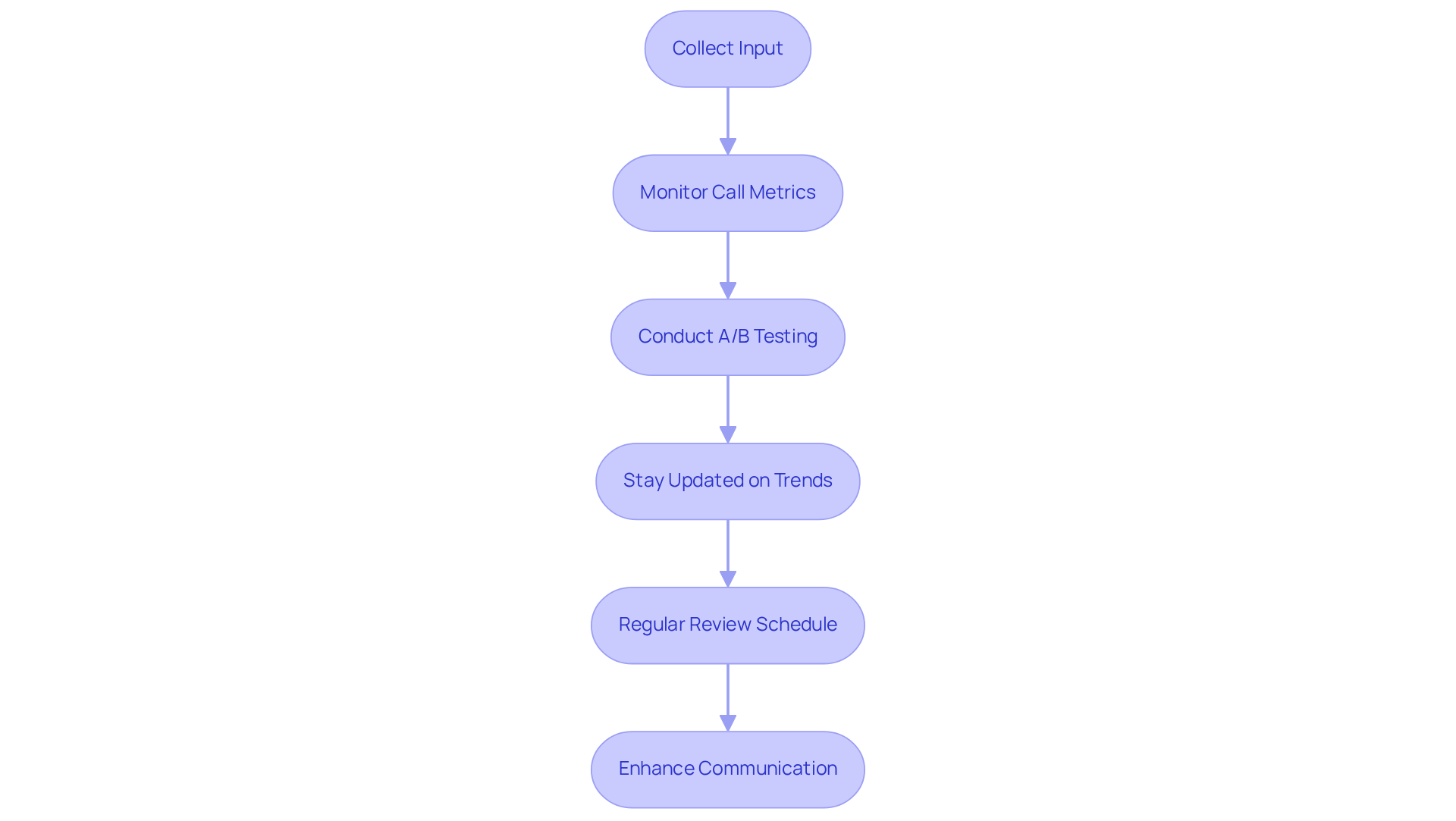
- Collect Input: Actively encourage visitors to share their experiences regarding your services. Use surveys or direct inquiries during their stay to gather feedback, which can be analyzed using VoicePrompts.ai's tools.
- Monitor Interactions: Analyze data to identify patterns in visitor interactions. For instance, if a significant number of callers disconnect during the introduction, it may suggest that the content is too lengthy or unclear. VoicePrompts.ai can effectively track these metrics.
- Conduct A/B Testing: Experiment with different versions of your greeting to determine which resonates best with visitors. This method can help identify the most effective language and tone, leveraging VoicePrompts.ai's capabilities to streamline the testing process.
- Stay Updated on Trends: Keep informed about industry trends and evolving guest expectations. As preferences change, your welcoming texts should adapt accordingly to remain relevant, and VoicePrompts.ai can provide insights into these trends.
- Regular Review Schedule: Establish a consistent timetable for assessing and revising messages, ensuring they reflect any changes in services, policies, or branding. VoicePrompts.ai can assist in automating this review process, simplifying the task of keeping your communications current.
By consistently evaluating and adapting the greeting phone message for your business with the support of VoicePrompts.ai, hotels can enhance their communication strategies and significantly improve overall guest satisfaction. Are you ready to elevate your messaging?
Conclusion
Crafting an effective greeting phone message for a hotel is not just important; it’s essential for establishing a positive first impression and enhancing the overall guest experience. Effective communication in the hospitality industry can make all the difference. By focusing on warmth, clarity, and personalization, hotels can create a welcoming atmosphere that resonates with callers and sets the tone for their stay.
Consider the challenges hotel managers face: how do you ensure every caller feels valued? Key strategies include:
- A friendly welcome
- Clear identification of the hotel
- Providing options for assistance
Tailoring greetings to the target audience and utilizing technology for streamlined message creation can significantly enhance communication efficiency. Regular evaluation and adaptation of these messages ensure they remain relevant and impactful, fostering guest loyalty and satisfaction.
Ultimately, investing in well-crafted greeting messages is not merely a best practice; it’s a vital component of exceptional customer service in the hospitality industry. By prioritizing effective communication, hotels can reassure guests, enhance their experiences, and cultivate lasting relationships that drive positive word-of-mouth and repeat business.
So, why wait? Embrace these strategies to elevate guest interactions and create memorable experiences that guests will cherish and share.
Frequently Asked Questions
Why is an effective greeting message important in the hospitality industry?
An effective greeting message sets the tone for a guest's experience, ensuring they feel valued from the very first interaction, which significantly boosts customer satisfaction.
What should a warm welcome include in a greeting message?
A warm welcome should start with a friendly greeting, such as 'Hello and welcome to [Hotel Name]!' which helps make the caller feel appreciated.
How can clear identification be incorporated into a greeting message?
Clear identification involves stating the name of the hotel to eliminate confusion and assure callers they have reached the right place, enhancing brand recognition.
What is the purpose of outlining the call's intent in a greeting message?
Outlining the purpose of the call, such as offering assistance or information, invites engagement and sets the stage for a helpful interaction, for example, by saying, 'How may I assist you today?'
How can options for assistance be effectively communicated in a greeting message?
Clear options for assistance can be provided by directing callers to specific departments or services, using phrases like, 'Press 1 for reservations, 2 for visitor services, or remain on the line for assistance.'
What role does positive language play in a greeting message?
Positive language fosters a welcoming atmosphere and encourages customer engagement, while avoiding negative phrases that could deter callers, ultimately improving customer responses.
How can hotel managers create customized greeting messages?
Hotel managers can consult user guides offered by VoicePrompts.ai to efficiently craft customized salutations, and utilize the one-click export function for easy integration in any format.
List of Sources
- Define Key Elements of an Effective Greeting Message
- Study proves the right way to greet customers — Jeff Toister (https://toistersolutions.com/blog/customer-greeting-study)
- campaignmonitor.com (https://campaignmonitor.com/resources/infographics/how-effective-are-welcome-emails)
- Best Practices for Hotel Branding in 2026 (https://longitudedesign.com/best-practices-for-hotel-branding-in-2026)
- littlehotelier.com (https://littlehotelier.com/blog/running-your-property/hotel-welcome)
- How hotels—and guests—can benefit from text-messaging engagement - HOTELSMag.com (https://hotelsmag.com/news/how-hotels-and-guests-can-benefit-from-text-messaging-engagement)
- Customize Greetings for Your Target Audience
- Why personalized guest experience in hotels Matters Today (https://landmarkhotelgroup.com/blog/the-rise-of-hotel-personalization-why-guest-experience-matters-more-than-ever)
- breakingtravelnews.com (https://breakingtravelnews.com/news/article/crm-driven-personalization-moving-beyond-automated-messages-to-predict)
- New consumer insights reveal hotel booking trends and loyalty patterns- Qualtrics (https://qualtrics.com/articles/customer-experience/new-consumer-insights-reveal-hotel-booking-trends-and-loyalty-patterns)
- hotel-online.com (https://hotel-online.com/news/crm-driven-personalization-moving-beyond-automated-messages-to-predictive-guest-experiences)
- Implement a Streamlined Process for Message Creation
- How hotels—and guests—can benefit from text-messaging engagement - HOTELSMag.com (https://hotelsmag.com/news/how-hotels-and-guests-can-benefit-from-text-messaging-engagement)
- escoffier.edu (https://escoffier.edu/blog/world-food-drink/hospitality-industry-trends-and-statistics)
- blog.voiceprompts.ai (https://blog.voiceprompts.ai/master-recorded-phone-messages-to-enhance-hotel-guest-experience)
- blog.voiceprompts.ai (https://blog.voiceprompts.ai/craft-effective-greeting-voice-message-samples-for-hotel-success)
- 22 Hospitality Quotes for Hotels - SiteMinder (https://siteminder.com/r/inspirational-hospitality-quotes)
- Evaluate and Adapt Your Greeting Messages Regularly
- blog.voiceprompts.ai (https://blog.voiceprompts.ai/crafting-the-perfect-phone-greeting-message-for-your-hotel)
- How hotels—and guests—can benefit from text-messaging engagement - HOTELSMag.com (https://hotelsmag.com/news/how-hotels-and-guests-can-benefit-from-text-messaging-engagement)
- unifocus.com (https://unifocus.com/newsroom/newsroom-library/gather-guest-feedback-0-0)
- 22 Hospitality Quotes for Hotels - SiteMinder (https://siteminder.com/r/inspirational-hospitality-quotes)
- phonesuite.com (https://phonesuite.com/articles/tips-for-successful-hote-guest-communication)
Start your 14-day trial in seconds
Create your account with just a few details and jump straight into the platform.