
Create an Emergency Voicemail Script for Therapists Today

Introduction
Creating an emergency voicemail script is not merely a technical requirement; it stands as a crucial element of effective communication for therapists. It ensures that clients feel heard and supported, even when they cannot reach their therapist directly. This guide delves into the essential components that constitute a compassionate and informative voicemail message, equipping therapists with the necessary tools to convey both urgency and reassurance.
However, what occurs when a client's immediate need for help intersects with the limitations of a voicemail system? Understanding how to craft a message that addresses this tension can significantly enhance the therapeutic relationship and foster client trust. By mastering this skill, therapists can ensure that their clients feel valued and understood, even in moments of crisis.
Identify Key Elements for an Emergency Voicemail Script
Creating an effective voicemail script is essential for establishing trust and ensuring client safety. Start with a greeting: "Hello, you've reached Your Name, a licensed therapist." This friendly introduction sets a positive tone right from the start.
Next, acknowledge the caller's attempt to reach you. A simple, "Thank you for calling. I’m currently unavailable to take your call," helps establish a connection and shows that their call is valued.
In case of a crisis, it’s vital to provide resources, including a warning if this is an emergency. For example, in the event of an emergency, you would say, "If this is an emergency, please hang up and dial 911 or contact your local emergency services." This direct instruction can alleviate anxiety for those in distress.
Follow up with instructions for non-urgent matters: "Please leave your name, number, and a short note, and I will return your call as soon as possible." This ensures that callers know their concerns will be addressed.
Lastly, reassure individuals about confidentiality: "Your call is confidential, and I will respond as soon as I can." This reminder is crucial in a therapeutic context, where clients may feel vulnerable.
Incorporating a personal touch is not just courteous; studies indicate that 60% of customers feel more valued when they hear a friendly voice. This personal touch significantly enhances the caller experience and fosters trust. Moreover, providing clear and concise information helps reduce anxiety, aligning with effective communication practices in mental health.

Draft the Voicemail Message with Clear Instructions
Creating a clear and professional voicemail message is crucial for effective communication. Here’s how to do it:
- Start with a Greeting: Begin with a friendly introduction, such as "Hello, you’ve reached [Your Name], a licensed therapist."
- State Your Unavailability: Clearly communicate your current status: "I’m currently in session or away from the phone."
- Emergency Instructions: Provide crucial information: "If this is an emergency, please hang up and dial 911 or contact your local crisis center."
- Instructions for Leaving a Note: Offer guidance for non-urgent matters: "For non-urgent matters, please leave your name, phone number, and a brief comment. I will return your call as soon as possible."
- Privacy Assurance: Assure clients about their privacy: "Please understand that your communication is private, and I will reply as soon as possible."
- Closing Statement: End on a positive note: "Thank you for your understanding, and I look forward to speaking with you soon."
This organized approach ensures that clients receive all necessary information, including what to do if this is an emergency, in a succinct and reassuring manner. Research shows that transparency in recorded communications significantly boosts the likelihood of callbacks, with 67% of individuals reviewing their voice recordings when left. By following these guidelines, therapists can enhance their communication effectiveness and foster trust with those they assist.

Choose an Appropriate Voice and Tone for Delivery
Effective communication is crucial in the field of therapy, especially when it comes to voicemail. Choosing the right voice and tone can create a welcoming atmosphere for clients. Here are some strategies to enhance your voicemail:
- Tone: Strive for an inviting and calm tone. Smiling while recording can significantly enhance the warmth in your message. With VoicePrompts.ai, you can select from various voice options that effectively convey this warmth.
- Clarity: Speak distinctly and maintain a moderate pace, ideally between 110-125 words per minute. This ensures that your message is easily understood, mimicking the flow of casual conversation and fostering rapport. VoicePrompts.ai allows you to listen to samples to find the perfect rhythm for your communication.
- Empathy: Use language that demonstrates understanding and support. Phrases like "I’m here to help" can greatly influence how clients perceive your availability and willingness to assist. VoicePrompts.ai's templates can help you craft compassionate messages tailored to your audience.
- Professionalism: Uphold a professional demeanor throughout your communication. This reassures clients of your competence and reliability, which is vital for building trust. With VoicePrompts.ai's AI-powered platform, you can ensure your messages are polished and professional in no time.
- Practice: Rehearse your content multiple times before recording to ensure a smooth delivery. Regular updates to your messaging system can reflect changes in your practice and maintain relevance. VoicePrompts.ai offers over 850 options for customizing your messages, allowing you to tailor your communication effectively.
By focusing on these elements and leveraging the features of VoicePrompts.ai, therapists can create messages that not only inform but also provide comfort and reassurance to clients, enhancing their overall experience.

Review and Deploy Your Emergency Voicemail Script
is crucial in the field, particularly in situations where one might need to use a therapist if this is an emergency. A well-crafted voicemail can make all the difference in how hotel management supports clients in need. Here’s how to ensure your message is effective:
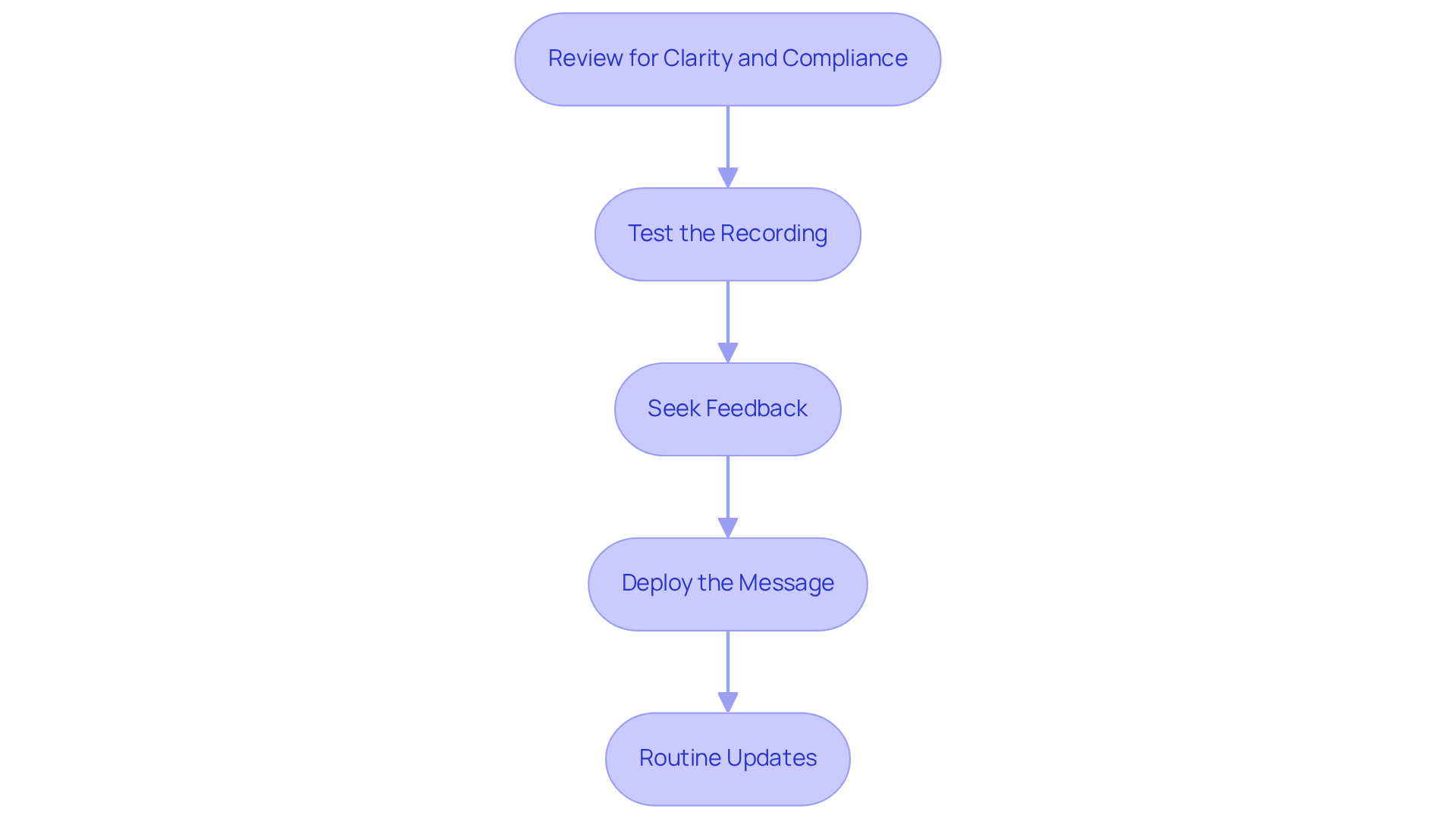
- Review for Clarity and Compliance: Your communication must be clear and concise, adhering to regulations like HIPAA to protect client confidentiality. Consider leveraging VoicePrompts.ai's services to create a custom script that effectively conveys your commitment to quality service.
- Test the Recording: After recording your content, listen carefully to assess clarity, tone, and pacing. Make adjustments as needed to ensure it communicates the right information about your services, including any special offerings or emergency procedures.
- Seek Feedback: If possible, have a colleague or trusted individual listen to your voicemail. Their feedback can provide valuable insights into its effectiveness and highlight areas for improvement, particularly regarding how clarity can enhance the impact.
- Deploy the Message: Once satisfied with the recording, upload it to your phone system and set it as the active message. This ensures it’s readily available for callers in need.
- Routine Updates: Regularly assess and revise your message script to incorporate any changes in your offerings or urgent procedures. Keeping your message updated is essential for maintaining communication with your guests.
By implementing these steps, hotel managers can create a reliable voicemail if this is an emergency, which not only supports clients in need but also ensures that communication remains clear and compliant. Don’t wait - take action now to enhance your services!
Conclusion
Creating an effective emergency voicemail script is crucial for therapists. It ensures that clients feel supported and informed, even when direct communication isn't possible. A well-structured voicemail conveys professionalism and fosters trust - both vital in therapeutic relationships. By integrating a warm greeting, clear emergency instructions, and reassurance of confidentiality, therapists can significantly enhance the caller's experience and alleviate anxiety during distressing moments.
Key elements such as tone, clarity, and empathy in voicemail messages are essential. The guidelines provided, including specific phrases and organizational strategies, help therapists craft messages that are both effective and comforting. Regular updates and testing of the voicemail ensure it remains relevant and compliant with privacy regulations, ultimately improving communication with clients.
In an era where mental health support is increasingly important, developing a thoughtful emergency voicemail script can make a meaningful difference. Therapists should implement these best practices - not only to enhance their professional image but also to provide a lifeline for clients in need. By prioritizing clear communication and emotional support through voicemail, therapists can ensure that help is always just a call away.
Frequently Asked Questions
Why is it important to create an effective emergency voicemail script?
An effective emergency voicemail script is essential for establishing trust and ensuring clear communication with callers.
What should be included in the greeting of an emergency voicemail script?
The greeting should start with a warm introduction, such as, "Hello, you've reached [Your Name], a licensed therapist," to set a positive tone.
How can I acknowledge a caller's attempt to reach me in the voicemail?
You can acknowledge the caller by saying, "Thank you for calling. I’m currently unavailable to take your call," which helps establish a connection and shows that their call is valued.
What should I say in the voicemail if the caller is experiencing a crisis?
In case of a crisis, it's vital to provide clear guidelines, such as, "If this is an emergency, please hang up and dial 911 or contact your local emergency services."
What instructions should be given for non-urgent matters in the voicemail?
For non-urgent matters, you can say, "Please leave your name, number, and a short note, and I will return your call as soon as possible," ensuring callers know their concerns will be addressed.
How should I reassure callers about confidentiality in my voicemail?
You should include a reminder like, "Your call is confidential, and I will respond as soon as I can," which is crucial in a therapeutic context where clients may feel vulnerable.
What is the impact of using a warm greeting in the voicemail?
Incorporating a warm greeting can make callers feel more valued; studies indicate that 60% of customers feel more appreciated when they hear personalized greetings.
How does providing clear urgent instructions help callers?
Providing clear and concise urgent instructions helps reduce anxiety for those in distress, aligning with effective communication practices in mental health.
List of Sources
- Identify Key Elements for an Emergency Voicemail Script
- voicemailcraft.com (https://voicemailcraft.com/blog/warm-voicemail-greetings-improve-customer-trust)
- richmondtelecom.com (https://richmondtelecom.com/the-power-of-voice-7-stats-that-prove-its-significance-in-modern-business)
- salesleadsinc.com (https://salesleadsinc.com/blog/2019/nov/6-voicemail-statistics-your-security-company-need-to-know)
- cloudtalk.io (https://cloudtalk.io/blog/voicemail-script-for-therapist)
- Sales Voicemail Statistics – Is Leaving A Message Worth It? - SalesBuzz (https://salesbuzz.com/sales-voicemail-statistics-is-leaving-a-message-worth-it)
- Draft the Voicemail Message with Clear Instructions
- Sales Voicemail Statistics – Is Leaving A Message Worth It? - SalesBuzz (https://salesbuzz.com/sales-voicemail-statistics-is-leaving-a-message-worth-it)
- simplepractice.com (https://simplepractice.com/blog/write-voicemail-script-private-practice-office)
- 35 Best Therapy Quotes to Inspire and Motivate Others (https://positivepsychology.com/best-therapy-quotes)
- salesleadsinc.com (https://salesleadsinc.com/blog/2019/nov/6-voicemail-statistics-your-security-company-need-to-know)
- sellcell.com (https://sellcell.com/blog/voicemail-statistics)
- Choose an Appropriate Voice and Tone for Delivery
- pmc.ncbi.nlm.nih.gov (https://pmc.ncbi.nlm.nih.gov/articles/PMC9979575)
- quo.com (https://quo.com/blog/therapist-voicemail-script)
- fundz.net (https://fundz.net/sales-intelligence-blog/the-importance-of-voice-tone-in-phone-sales-empirical-evidence-and-practical-insights)
- mentalyc.com (https://mentalyc.com/blog/therapist-voicemail-script)
- Review and Deploy Your Emergency Voicemail Script
- 15 Business Phone Stats Small Business Owners Need to Know (2026) (https://ambscallcenter.com/blog/business-phone-stats)
- sellcell.com (https://sellcell.com/blog/voicemail-statistics)
- Numa | 22 Business Phone Statistics (https://numa.com/blog/22-business-phone-statistics)
- Sales Voicemail Statistics – Is Leaving A Message Worth It? - SalesBuzz (https://salesbuzz.com/sales-voicemail-statistics-is-leaving-a-message-worth-it)
- salesleadsinc.com (https://salesleadsinc.com/blog/2019/nov/6-voicemail-statistics-your-security-company-need-to-know)
Book a demo of VoicePrompts
Share a few details and we'll reach out to schedule a time.