
What to Do When Leaving Callers on Hold: Best Practices for Hotels
Introduction
In the dynamic realm of hospitality, managing caller expectations during hold times is crucial for guest satisfaction. Hotels grapple with the challenge of making waiting callers feel valued and informed, a factor that can greatly influence their overall experience. This article explores best practices for leaving callers on hold, highlighting strategies that not only reduce frustration but also foster engagement through effective communication. How can hotels turn the often-dreaded wait time into a chance for connection and loyalty?
Understanding the significance of effective communication is paramount. When guests are left on hold, their patience can wear thin, leading to dissatisfaction. However, by implementing thoughtful strategies, hotels can transform this waiting period into an opportunity to build rapport. Consider the impact of personalized messages or informative updates that keep callers engaged.
Moreover, statistics show that hotels that prioritize caller communication see a marked improvement in guest loyalty. By acknowledging the complexities of hotel management, we can appreciate the need for a balanced approach-one that combines authority with relatability.
As we delve deeper into this topic, we’ll uncover actionable insights that can help hotel managers navigate these challenges effectively. Are you ready to enhance your guest experience and foster lasting connections? Let's explore how to make every second count.
Set Clear Expectations for Hold Times
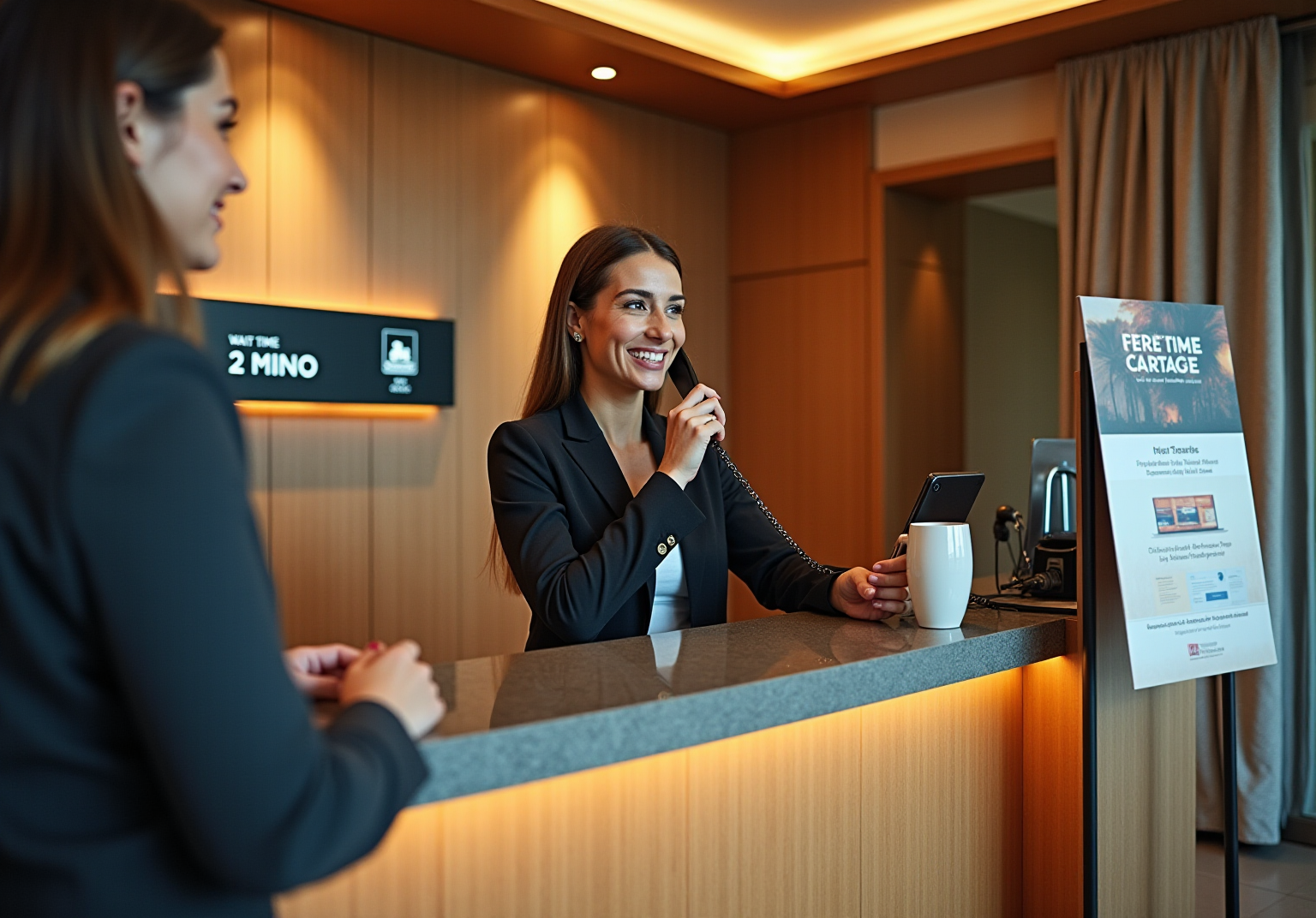
Effective communication is crucial in the hospitality industry, especially when it comes to managing guest expectations. Hotels often face the challenge of long hold times, leading to the question of what should you do when you leave a caller on hold, which can result in frustration and dissatisfaction among callers. To combat this, it’s essential to inform guests of their expected hold time immediately after asking what should you do when you leave a caller on hold?. A simple message like, 'Thank you for calling. Your estimated wait time is roughly 2 minutes,' can significantly alleviate anxiety and help guests feel more in control of their waiting experience.
Moreover, when considering what should you do when you leave a caller on hold, offering an option for callers to receive a callback instead of waiting can greatly enhance their experience and reduce hang-ups. By leveraging VoicePrompts.ai's AI-driven platform, accommodations can easily create and save personalized waiting announcements that clarify wait durations and provide other essential information. Consistently updating these communications ensures they remain relevant and accurate, reinforcing the establishment's commitment to outstanding service.
To implement these best practices effectively, accommodation managers can refer to user manuals for step-by-step guidance on crafting waiting communications tailored to their specific needs. By prioritizing clear and proactive communication, hotels can not only improve guest satisfaction but also strengthen their reputation in a competitive market.

Utilize Engaging On-Hold Messaging
In the hospitality industry, effective communication is paramount. Hotels must consider what should you do when you leave a caller on hold by investing in creating engaging on-hold content that informs and entertains. This approach addresses a common challenge faced by hotel managers regarding what should you do when you leave a caller on hold to keep potential guests engaged while they wait. Imagine a communication that states, "While you wait, did you know our establishment boasts a rooftop pool and spa? Ask about our special spa packages when you speak with an agent!" This not only captivates callers but also promotes services that can enhance their stay.
By utilizing VoicePrompts.ai, accommodations can effortlessly generate professional on-hold communications in minutes. Tailoring these messages to fit their brand voice and communication strategy is simple and effective. With VoicePrompts.ai's AI-powered platform, there’s no need for studios or voice actors, ensuring a faster and more affordable process.
Follow our streamlined 4-step process:
- Choose your message type
- Customize your content
- Preview your message
- Export it in your desired format
This efficiency empowers accommodations to improve their communication with guests seamlessly. Why wait? Elevate your guest experience today with VoicePrompts.ai!

Leverage Technology for Efficient Messaging
Effective communication is crucial in the hospitality industry, especially when it comes to managing guest expectations during wait times. Hotels can significantly enhance their messaging by leveraging advanced technology solutions that facilitate quick updates and customization. With VoicePrompts.ai, accommodations can effortlessly generate and oversee on-hold communications from a selection of over 850 industry-specific AI-trained scripts. This ensures that messaging is always aligned with current promotions and services, addressing the challenges hotel managers face in maintaining relevance.
The platform allows for the production of high-quality audio messages without the need for traditional studios, enabling rapid deployment of new content in under five minutes. This capability not only streamlines operations but also empowers hotels to respond swiftly to changing circumstances. Furthermore, accommodations can utilize analytics to monitor the effectiveness of their messaging, making data-driven decisions that enhance caller engagement. By implementing these innovative solutions, hotels can transform wait times into valuable opportunities for connection, ultimately boosting guest satisfaction and loyalty.
Consider this: efficient waiting messages can lead to an impressive 20% increase in revenue. Establishments employing AI solutions have reported a 30-50% reduction in operational costs. As VoicePrompts.ai states, "Hotel managers can implement new messages within minutes using the user-friendly platform." This showcases the efficiency and effectiveness of this technology.
Are you ready to elevate your hotel's communication strategy? Embrace the power of VoicePrompts.ai and turn your wait times into a competitive advantage.

Gather Feedback and Continuously Improve
Effective communication is crucial in the hospitality industry, especially when considering what should you do when you leave a caller on hold. Hotel managers often face the challenge of ensuring that guests feel valued during their wait times, highlighting the importance of knowing what should you do when you leave a caller on hold. To tackle this, establishments must create a robust system for gathering feedback from individuals.
Implementing post-call surveys or follow-up emails serves as an effective method to assess participant experiences. Consider asking questions like, 'How satisfied were you with the information provided during your wait?' or 'What additional information would you have liked to hear?' Analyzing this feedback enables accommodations to make data-driven adjustments to their communication strategies.
VoicePrompts.ai offers industry-specific messaging solutions that transform wait times into opportunities for engagement and trust-building. With customizable messaging options, hotels can highlight their amenities and services, significantly enhancing the caller's experience. Moreover, closing the feedback loop by responding to guests or refining processes fosters loyalty and credibility.
To enhance customer satisfaction and nurture loyalty, it's important to consider what should you do when you leave a caller on hold, as continuous improvement of the on-hold experience ultimately leads to a more positive overall guest experience. Timing is also critical; gathering insights shortly after the call can yield more accurate and actionable responses.
Are you ready to elevate your communication strategy? Embrace the power of feedback and watch your guest satisfaction soar.

Conclusion
Effective communication is crucial in the hospitality industry, especially when it comes to managing caller hold times. For hotels aiming to boost guest satisfaction and stay competitive, this aspect cannot be overlooked. By adopting best practices - like setting clear expectations, utilizing engaging on-hold messaging, leveraging technology, and continuously gathering feedback - hotels can turn a frustrating experience into an opportunity for connection and service excellence.
Consider the impact of proactive communication. Informing callers about estimated wait times and offering callback options can significantly alleviate anxiety and enhance their overall experience. Moreover, crafting engaging on-hold messages that highlight hotel services not only entertains callers but also builds anticipation for their upcoming stay. Integrating advanced technology solutions streamlines this process, enabling quick updates and personalized content that resonates with guests.
Ultimately, a commitment to improving the on-hold experience showcases a hotel’s dedication to quality service. By embracing these strategies, hotels can foster loyalty, elevate customer satisfaction, and even drive revenue. Now is the time for hotel managers to take decisive action - leveraging these insights to refine communication strategies and ensure that every guest feels valued, even while on hold.
Frequently Asked Questions
Why is effective communication important in the hospitality industry?
Effective communication is crucial in the hospitality industry to manage guest expectations and reduce frustration, especially regarding long hold times when guests are on the phone.
What should hotels do when leaving a caller on hold?
Hotels should inform guests of their expected hold time immediately after placing them on hold, such as saying, "Thank you for calling. Your estimated wait time is roughly 2 minutes," to alleviate anxiety and help guests feel more in control.
How can hotels enhance the caller experience when hold times are long?
Hotels can enhance the caller experience by offering an option for callers to receive a callback instead of waiting on hold, which can reduce hang-ups and improve overall satisfaction.
What tools can hotels use to manage hold times effectively?
Hotels can leverage VoicePrompts.ai's AI-driven platform to create and save personalized waiting announcements that clarify wait durations and provide essential information to callers.
Why is it important to consistently update waiting communications?
Consistently updating waiting communications ensures that they remain relevant and accurate, reinforcing the establishment's commitment to outstanding service and improving guest satisfaction.
Where can accommodation managers find guidance on crafting waiting communications?
Accommodation managers can refer to user manuals for step-by-step guidance on crafting waiting communications tailored to their specific needs.
List of Sources
- Set Clear Expectations for Hold Times
- The Importance of On-Hold Messages: Keeping Your Customers Informed This Christmas - The Unite Group (https://theunitegroup.co.uk/2024/12/19/the-importance-of-on-hold-messages)
- Why Caller Experience Will Matter More Than Ever in 2026 (https://easyonhold.com/blog/why-caller-experience-will-matter-more-than-ever-in-2026)
- voiceprompts.ai (https://voiceprompts.ai/post/4-best-practices-for-effective-holding-messages-in-hotels)
- The Power of On Hold Messaging: A Small Feature with Big Impact - circle.cloud (https://circle.cloud/the-power-of-on-hold-messaging)
- On Hold Messaging Tips for Hotels | Tips & Examples (https://cohm.com/on-hold-messaging-tips-for-hotels)
- Utilize Engaging On-Hold Messaging
- Existing Customer Engagement Driven by Messages On Hold - Telephonetics (https://telephonetics.com/more-than-a-pause-how-hold-messages-drive-results)
- On Hold Messaging Tips for Hotels | Tips & Examples (https://cohm.com/on-hold-messaging-tips-for-hotels)
- The facts about on hold messages - Liz Drury Voiceovers (https://lizdrury.com/blog/the-facts-about-on-hold-messages)
- The Importance of On-Hold Messages: Keeping Your Customers Informed This Christmas - The Unite Group (https://theunitegroup.co.uk/2024/12/19/the-importance-of-on-hold-messages)
- Leverage Technology for Efficient Messaging
- Voice Prompts (https://voiceprompts.ai/post/7-benefits-of-ai-on-hold-messaging-for-hospitality-success)
- Hilton expands on-property messaging in bid to enhance guest experience (https://hoteldive.com/news/hilton-expands-mobile-messaging-guest-experience/706121)
- voiceprompts.ai (https://voiceprompts.ai/post/7-benefits-of-on-hold-message-service-for-hotel-managers)
- blog.thehotelsnetwork.com (https://blog.thehotelsnetwork.com/the-ai-revolution-in-hospitality-why-voice-agents-are-changing-the-game-for-hoteliers)
- AI in Hospitality Statistics: 48 Statistics That Prove the Industry Is in Hypergrowth (https://hoteltechreport.com/news/ai-in-hospitality-statistics)
- Gather Feedback and Continuously Improve
- hotelcontractbeds.co.uk (https://hotelcontractbeds.co.uk/blog/2015/05/customer-review-gathering-methods)
- mews.com (https://mews.com/en/blog/guest-satisfaction-survey)
- How to Collect Guest Feedback at a Hotel – SurveyMethods (https://surveymethods.com/how-to-collect-guest-feedback-at-a-hotel)
- 5 Techniques to Collect More Feedback and Reviews from Your Guests (https://hoteltechreport.com/news/techniques-to-collect-feedback)
- How to Collect Hotel Guest Feedback - A Guide (https://canarytechnologies.com/post/hotel-guest-feedback-guide)
Start your 14-day trial in seconds
Create your account with just a few details and jump straight into the platform.